
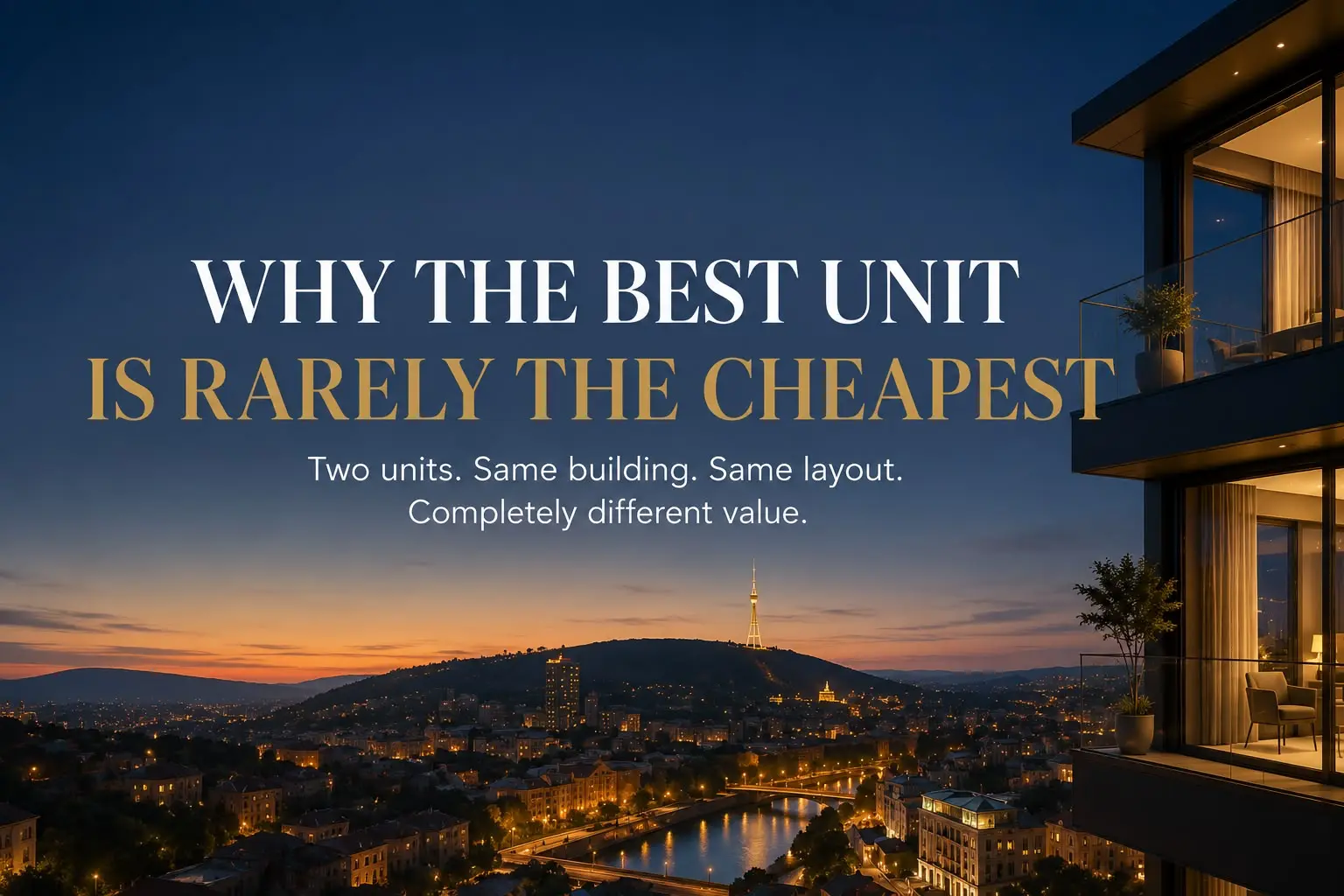
A smarter way to think about real estate investment
Most property buyers compare projects. Experienced investors compare units.
There is a common misconception in real estate: if two apartments have the same size, the same layout, and sit in the same building, they must hold the same value. In reality, they are often two completely different assets.
The difference may not show up on a floor plan or in a glossy sales brochure—but it becomes obvious the moment you live in the property, rent it out, or try to sell it years down the line.
Every Building Contains Different Assets
A residential tower is not one asset; it is a collection of hundreds of individual assets, each with its own risk profile and value trajectory. Two apartments can share an identical layout yet deliver two entirely different ownership experiences:
-
One sits next to the elevator lobby — the other is at the end of a quiet corridor.
-
One overlooks the pool deck — the other enjoys an open, unobstructed skyline.
-
One faces a busy main road — the other looks onto landscaped gardens.
The price gap at launch may seem minor, but the long-term gap in desirability, liquidity, and resale value can be substantial.
The Cheapest Unit Is Often Cheap for a Reason
Developers price units based on their position within the project. Many buyers assume the lowest-priced unit is the smartest deal. Sometimes it is, but more often, it reflects compromises that stay with the property for its entire lifecycle:
-
Limited privacy
-
Higher noise exposure
-
Less desirable views
-
Proximity to service or back-of-house areas
-
Reduced natural light
-
Weaker resale demand
Buying the cheapest unit without understanding why it is cheaper isn’t a bargain—it is a risk in disguise.
Look Beyond the Project
Buyers routinely spend weeks researching the developer’s track record, the payment plan, and the surrounding community, yet they often choose their specific unit in a matter of minutes.
That is backwards. Once you have selected the right project, the next decision is critical: Which specific unit inside that project should you own?
Long-Term Value Is Built on Position
Certain characteristics hold their value regardless of market cycles or shifting trends:
-
✅ Genuine privacy
-
✅ Superior orientation and sun exposure
-
✅ Open, unobstructed views
-
✅ Distance from elevators, roads, and service zones
-
✅ Functional positioning within the wider community
-
✅ Scarcity relative to comparable units
These aren’t temporary marketing features; they are structural realities that cannot be renovated, upgraded, or changed after handover.
Think Like an Asset Investor
Before signing on any unit, ask yourself:
-
Why is this unit priced differently from similar units in the same building?
-
Would I still choose this exact position if every unit carried the same price tag?
-
Will future buyers value these same characteristics as much as I do today?
-
If I needed to sell in five years, would this unit outperform others in the same tower?
The smartest investors don’t just buy a project—they identify the strongest asset within that project.
In real estate, long-term performance is rarely determined by the community you choose alone; it is determined by the exact position you choose inside it.




Join The Discussion